Sri Lankan banks’ offshore lending surges 52% amid Middle East conflict risks
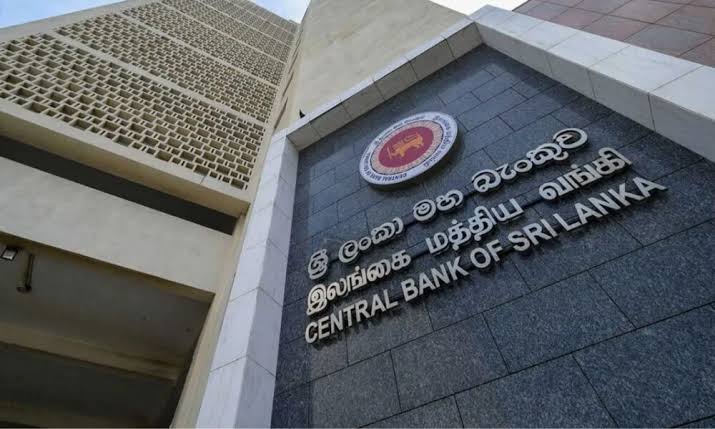
Sri Lanka’s banks increased lending to overseas borrowers by more than 50 percent in the year to June 2026, with offshore loans accounting for over a third of their outstanding foreign currency credit, even as emerging risks linked to the Middle East conflict placed growing pressure on loan portfolios, according to Central Bank of Sri Lanka (CBSL) data.
Lending to overseas entities, covering credit issued through both foreign and domestic branches, rose 51.9 percent year-on-year (YoY) by the end of June 2026, accelerating from 32.3 percent growth recorded a year earlier. The outstanding loan balance reached an estimated Rs. 1.15 trillion, equivalent to approximately US$3.4 billion and nearly twice the level recorded two years ago.
By the end of June, overseas borrowers accounted for 37.1 percent of the banking sector’s outstanding foreign currency (FCY) loans. In comparison, overall FCY lending grew by just 4.4 percent in US dollar terms and 17.2 percent in rupee terms.
After adjusting for the approximately 12 percent currency effect implied by these figures, offshore lending is estimated to have expanded by around 35 percent in dollar terms, roughly eight times the growth rate of the overall foreign currency loan portfolio.
However, signs of mounting credit risk have emerged. Stage 2 loans, which indicate a significant increase in credit risk without yet being classified as impaired, rose 10.4 percent during the second quarter, with much of the increase concentrated in lending to overseas entities, trade and tourism.
The CBSL attributed the deterioration to “the adverse economic spillovers arising from the conflict in the Middle East and the increase in cross-border vulnerabilities”. It warned that these loans could move into Stage 3 if borrowers’ ability to meet repayment obligations weakens further.
Despite these concerns, the banking sector’s Stage 3 loan ratio declined to 9.1 percent from 11.9 percent a year earlier, supported by rapid credit growth. Nevertheless, the absolute value of Stage 3 loans increased during both the first and second quarters, amid the effects of Cyclone Ditwah, higher fuel prices and the Middle East conflict.
Meanwhile, banks’ foreign currency investments declined 20.7 percent YoY, mainly as several lenders reduced their holdings of foreign sovereign securities. The CBSL said the reduction “may partly reflect a reallocation of FCY funds towards lending, including significant cross-border lending”.
Consequently, growth in total FCY assets slowed to 1.3 percent, compared with 10.5 percent a year earlier.
Foreign currency liabilities, meanwhile, increased 4.0 percent, largely driven by FCY deposits that received partial support from workers’ remittances. As liabilities grew faster than assets, the sector’s net FCY assets contracted 22.6 percent, reversing the 43.3 percent growth recorded in the corresponding period a year earlier.
The CBSL cautioned that the “aggressive expansion” of cross-border lending could expose banks to greater credit risk from overseas borrowers, foreign currency liquidity pressures, country-specific risks and exchange-rate volatility.
On their balance sheets, banks shifted from a net FCY asset position of Rs. 51.5 billion to a net liability position of Rs. 106.8 billion, representing a negative turnaround of Rs. 158.3 billion. However, off-balance-sheet long positions more than offset this shift, resulting in an overall net FCY exposure of Rs. 504.3 billion, up 31.0 percent year-on-year. This represented 21.3 percent of regulatory capital, compared with 18.9 percent a year earlier.
The data predate the CBSL’s decision last month to exclude top-rated foreign sovereign debt from large exposure limits. Effective October 1, the change allows banks to hold local-currency debt issued by any single top-rated foreign sovereign up to 50 percent of their Tier 1 capital, as previously reported by Mirror Business.
The regulatory change provides banks with greater scope to rebuild their holdings of foreign sovereign securities, which several lenders reduced during the first half of the year. However, it remains uncertain whether banks will prioritise rebuilding these investments or continue pursuing potentially higher returns through offshore lending.
Other regional lenders have adopted a more cautious approach since the Middle East conflict intensified. India’s largest lender, State Bank of India, suspended new business in the Gulf Cooperation Council region in May. This followed a record US$15 billion-plus in Gulf lending by Asian and Chinese banks in 2025, approximately three times the previous year’s level, according to Bloomberg-compiled data.
The CBSL review did not specify the destinations of Sri Lankan banks’ offshore loans or provide a breakdown between lending conducted through overseas and domestic branches. Nevertheless, it emphasised the need for continued monitoring of “the pace, composition and quality of credit” as cross-border lending expands and external economic risks intensify.
Hiru News










Post Comment