Sri Lanka must earn FTAs, says Deputy Minister
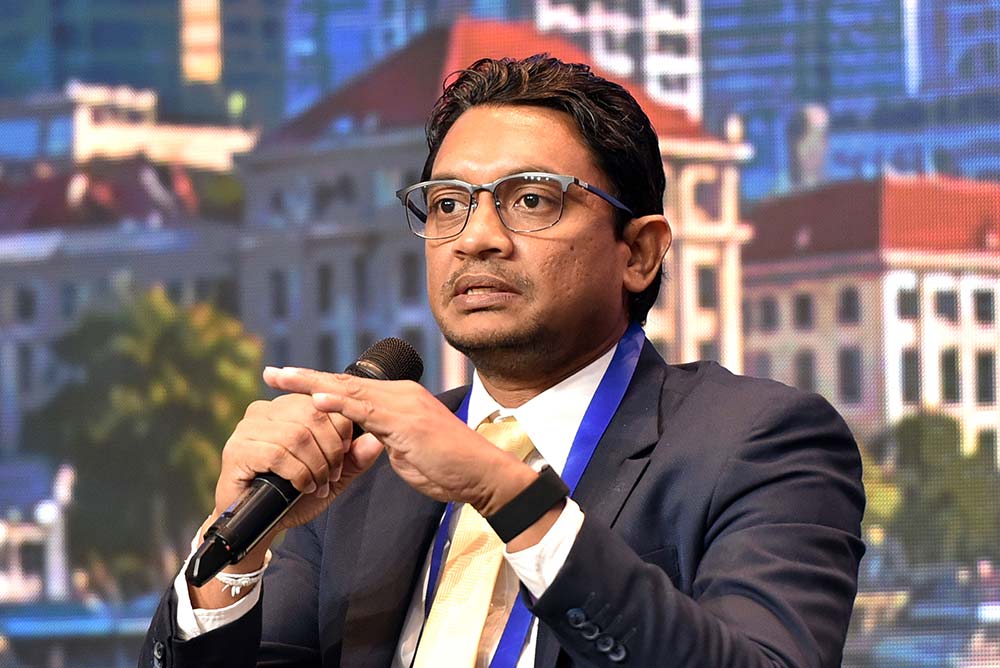
Sri Lanka must earn free trade agreements (FTAs) through deep domestic reforms rather than expect them to follow from negotiation alone, Industry and Entrepreneurship Development Deputy Minister Chathuranga Abeysinghe said.
The Government is now moving to dismantle import levies left untouched for two decades and is seeking entry into Asia’s largest trade bloc.
“We only talk about FTAs, but FTAs don’t come automatically. You have to earn them, and to earn them, you have to carry out a significant level of reforms in your country,” Abeysinghe said at The Ceylon Chamber of Commerce Sri Lanka Economic and Investment Summit last week.
With a small domestic market, Sri Lanka’s growth must come from integration into global value chains, he said, making market access a precondition for investment.
“Why would foreign direct investment (FDI) come to Sri Lanka if we can’t trade with other nations? Our market is so small,” Abeysinghe said. Some global companies operate locally, he added, but that was not enough.
Two barriers have kept Sri Lanka out of FTAs, he said. The first is the country’s two para-tariffs, the CESS and the Ports and Airports Development Levy (PAL), which are charged on imports on top of Customs duties. The Government plans to remove them by 2029. “For the last two decades, we did not touch it,” he said. He described the change as a reform other countries undertook in the 1980s and 1990s.
Opening the market requires groundwork, Abeysinghe said. Local industries must be strong enough to compete, standards must be enforced to create a level playing field, and anti-narcotics practices must be in place. His Ministry is driving these initiatives alongside the Trade Ministry and the Finance Ministry. The Government is also moving to a simplified four-band tariff structure and improving the efficiency of ports, Customs, and revenue structures. “These are fundamentals that we missed over decades,” he said.
Sri Lanka is now in a position to negotiate, Abeysinghe said. It has applied to join the Regional Comprehensive Economic Partnership (RCEP), which he said would open up 30% of the global market, including Australia and New Zealand. It is also close to reaching agreement on the Thailand FTA. Negotiations will start soon to upgrade the goods-only Indo-Sri Lanka FTA into a comprehensive trade agreement, and talks on a possible agreement are underway with Oman and the United Arab Emirates (UAE). In Europe, the Government is working to retain the EU’s Generalised Scheme of Preferences Plus (GSP+) trade concessions but will have to negotiate a separate trade agreement, he said. With the US, it has managed the existing trade arrangements.
Abeysinghe was blunt about where Sri Lanka can compete. “We can’t play in volume. That’s very clear. In the future, we can’t play on cost arbitrage. There’s no chance,” he said. Instead, the country must position itself in the upper tier of supply chain partners, whether by supplying talent or manufacturing key components for integration into global markets.
That shift places demands on the private sector as well as the State. Product diversification requires the private sector and the Government to jointly invest in research and development to create intellectual property and new products, Abeysinghe said. Barriers to capital repatriation, which have kept venture capital and private equity out of the startup ecosystem, will be removed this year, he added.
He also urged local businesses to seek partnerships with global companies. “We should be bold enough to go and shake hands,” he said. The Government wants hundreds of small and medium enterprises (SMEs) to be partner-ready. Most local firms, however, remain private companies, which global investors find hard to assess and approach, and listed companies are few. To address this, the Government plans to encourage mid-sized SMEs to list, and his Ministry will run a program to identify gaps that prevent local firms from forming global partnerships.
Abeysinghe said Sri Lanka is within two and a half hours of a population of 3.3 billion but has traditionally failed to capitalise on that location. Its trade strategy will rest on ports and maritime activities: bunkering, re-exports, and intraport trade. The Colombo, Hambantota, and Trincomalee ports will serve as strategic assets.
He said Sri Lanka would be ready to partner with the rest of the world within the next two to three years.
Source: Daily FT







Post Comment